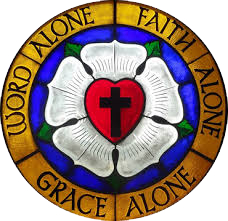
Lutheranism
The Oldest Branch of Protestantism: Doctrine, Confession, and Principles
Confessional Foundation and Identity
**Lutheranism** is one of the largest branches of Protestantism that identifies with the teaching of **Martin Luther**, a 16th-century German reformer. Its efforts to reform the theology and practice of the medieval church launched the Protestant Reformation. The initial divide with the Catholic Church was formally established with the **1521 Edict of Worms**, which condemned the movement and subjected its advocates to severe penalties.
The movement's enduring identity is defined by its commitment to the **Book of Concord (1580)**, which contains the foundational confessional documents of the church, including the **Augsburg Confession (1530)**, the **Formula of Concord (1577)**, and Luther's **Catechisms**. Lutheranism affirms the **Ecumenical Creeds** and views itself as the true continuation of the ancient, apostolic church.
The Foundational Divide: Formal and Material Principles
The core theological differences with the Roman Catholic Church center on two principles, often called the pillars of the Reformation:
1. The Material Principle: Justification by Faith Alone (Sola Fide)
This is the heart of Lutheran theology. It advocates that **salvation is a free gift of God’s grace received through faith in Christ**, not earned through human works, rituals, or merit. This doctrine of justification is encapsulated by the phrase: “by **grace alone** through **faith alone** on the basis of **Scripture alone**.”
2. The Formal Principle: Scripture Alone (Sola Scriptura)
This concerns the proper source of authority in the Church. Lutheranism holds that the **Bible** is the sole infallible source of Christian doctrine and the **final authority** on all matters of faith and life. This is in contrast to the belief that authority comes from both the Scriptures and Church Tradition, as affirmed by the Council of Trent.
These principles are completed by the three other *solas*:
- **Sola Gratia** (Grace Alone)
- **Solus Christus** (Christ Alone)
- **Soli Deo Gloria** (Glory to God Alone)
Doctrine and Sacramental Distinction
Unlike Calvinism, Lutheranism retains many of the liturgical practices and sacramental teachings of the pre-Reformation Church, with a particular emphasis on the Eucharist.
- Sacraments (Means of Grace): Lutherans recognize two sacraments instituted by Christ: **Holy Baptism** and **Holy Communion (Eucharist)**. The emphasis is that God's grace is conveyed *through* these physical means.
- The Real Presence: In the Eucharist, Lutherans teach **Sacramental Union (Consubstantiation)**, believing that the true **body and blood of Christ are physically present** "in, with, and under" the bread and wine. This is a primary theological difference from Reformed theology, which views the Lord's Supper as a purely spiritual or symbolic observance.
- Law and Gospel: A critical concept is the distinction between the **Law** (which reveals sin and commands obedience) and the **Gospel** (which reveals Christ's forgiveness). This theological lens is used to correctly interpret and preach all of Scripture.
- Adiaphora and Liturgy: Guided by the principle of **Adiaphora** ("things indifferent"), Lutheran worship is highly **liturgical** and conservative, retaining vestments, the altar, and much of the historic structure of the Mass, as long as these practices do not contradict the central doctrine of justification.
The Two Kingdoms Doctrine and Ethics
Lutheran political theology, the doctrine of the **Two Kingdoms (Zwei Reiche)**, defines the relationship between the believer, the Church, and the secular State.
- **The Spiritual Kingdom:** God rules through the **Gospel** in the hearts and consciences of Christians, bringing forgiveness and eternal life.
- **The Temporal Kingdom:** God rules through **Law** and **civil authority (the State)** over all people to maintain external peace and punish injustice.
The **Vocation** (or Calling) doctrine extends this idea, asserting that Christians serve God by fulfilling their ethical duties in their specific roles within the temporal kingdom (family, work, society). This theology insists that the two kingdoms must be kept separate: the State cannot legislate faith, and the Church cannot rule the State.